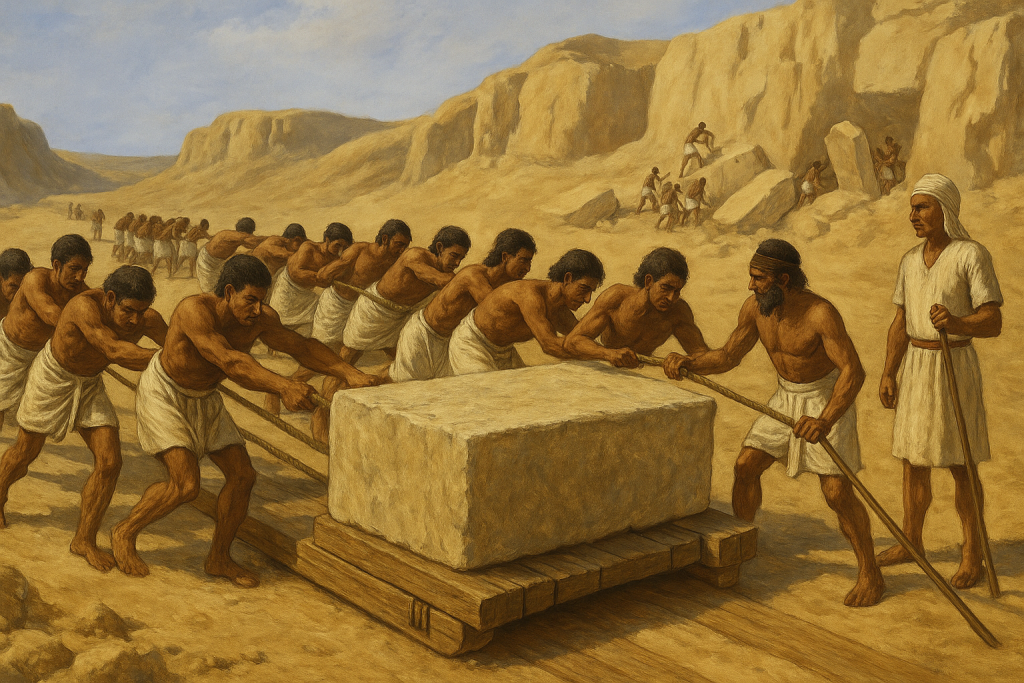

Writing was first invented by the Sumerians between 3200-3100 BC. The origin of writing is drawing.
Until the discovery of cuneiform, mankind went through the following stages:
- Tokens: Three-dimensional symbols
- Bullas: Clay balls bearing the two-dimensional seal impression signs of tokens
- Seal-imprinted tablets
- Pictography (picture writing): Signs engraved or carved on clay tablets
- Sumerian cuneiform
TOKENS – CALCULATION STONES
- In the early years of archaeology, experts thought that small clay objects found in excavations in Mesopotamia were talismans or game figures.
- In 1986, American female archaeologist Schmandt-Besserat noticed that many token shapes matched the shapes on clay tablets. It is understood that tokens (calculation stones) were a calculation and recording system used before writing.
- The oldest records about accounting are found in Sumerian cuneiform tablets.
- When humans started producing more than they consumed, they started to exchange them. And this created the need to keep accounts over time. Calculations were first made with pebbles that were easily found everywhere. However, pebbles could not be shaped.
- Initially developed by humans for the purpose of keeping accounts, tokens eventually evolved into the first form of writing, Sumerian Cuneiform.
- The following question is generally asked: “Did accounts start to be recorded after writing was invented, or did the need to record commercial transactions lead to the invention of writing?” As economic needs developed, keeping accounts must have led to the need for the invention of writing.
- Temples in Mesopotamia functioned as a kind of bank. Over time, as the number and variety of goods entering and exiting temple warehouses increased, the need to keep accounts of them arose. As the income of temples increased, keeping accounts became more difficult. In 3300 BC, tokens became the sole accounting tool of priest administrators in temples. Many clay tablets contain accounts of commercial transactions related to agriculture and animal husbandry.
- Plain tokens usually had a flat surface and were used to keep track of agricultural products and animal numbers.
- Tokens were usually made of clay, between 1-4 cm, in various geometric shapes. They mostly consisted of shapes such as cones, spheres, flats, disks, cylinders, ovals, rectangles, and triangles. Each one corresponded to a different commodity and provided information about the type and size of the commodity. A cylindrical token meant “an animal”; sphere and cone-shaped tokens meant grain.
- While plain tokens represented grains and animals such as sheep and goats, there is evidence that complex tokens represented labor (labor) and manufactured goods.
- While tokens initially had 12 different shapes, their varieties increased over time. An average of 350 different types of tokens made in 3500 BC have been identified. These include geometric shapes such as parabola, twisted coil, barrel, quadrilateral, triangle, oval, and natural-shaped tokens such as ships, vehicles, and animals.
- Thanks to these new tokens called complex tokens, many products can be calculated more clearly. They represent manufactured goods such as textiles, jewelry, bread, beer, and honey.
- The calculation stones unearthed in ZİYARET TEPE (Diyarbakır), the provincial capital of the Assyrian Empire, prove that this system was also used in the 1st millennium BC.
- Approximately 500 calculation stones have been unearthed so far in the Ziyaret Tepe excavations. Among the calculation stones unearthed, 8 main shapes have been identified: spherical, tetrahedral, disk, cylinder, cone, inclined cone, oxhide, and square.
- The vast majority of the calculation stones found in Ziyaret Tepe are related to grain trade; receipts for barley received from farms far from the center, payments for borrowed barley and food shares, etc.

BULLA
- There were two different methods for archiving tokens: by drilling holes on the tokens and tying them together, or by placing the tokens in clay envelopes (bulla). In this way, the tokens were kept together safely and the commercial transaction was guaranteed by sealing.
- Bullas are hollow spheres or oval-shaped balls made of clay to hold the tokens together. They are approximately 5-9 cm in diameter. Each bulla represented a record of a commercial transaction.
- Translation of a bulla nail text:
“Sheep and Goat Stones: 21 ewes that gave birth, 6 female lambs, 8 full-grown rams, 4 male lambs, 6 ewes that gave birth, 1 billy goat, 2 female offspring. Seal of Ziqarru (shepherd)”.
- While the tokens were always visible in the binding method, bullae kept the tokens hidden, meaning that the bulla could not be broken and what was inside was unknown.
- After being sealed and dried, the clay bulla turned into a kind of steel case, and it was impossible to steal a token from inside unless it was broken open.
- Later, a “marking” system was developed; tokens were printed on the surface of the clay while it was still wet.
CLAY TABLETS
- A clay tablet is a clay plate used to write cuneiform in ancient times.
- Clay tablets began to be used after the Sumerians discovered cuneiform in 3000 BC.
- In addition to clay, leather, wood and wax were also used in tablet production. However, since they are not durable, there are not many examples that have survived to the present day.
- Clay is a soft and oily soil that can be easily shaped when wet. It is abundant in nature, especially on the banks of the Tigris and Euphrates rivers. Many Mesopotamian civilizations such as the Sumerians, Akkadians, Assyrians, Elamites and Babylonians easily obtained the clay that accumulated here. The most common area of use of clay in history is household tools such as tablets, bowls, pots, plates and jugs.
- While the clay was still soft, it was written on with a pen-STYLUS, which was usually made of reed and had a triangular tip. After the writings were written, the tablet was left to dry. After the tablet was dried, it was sometimes baked in an oven to make it more durable.
- Tablets are very durable materials. They have survived to the present day without deteriorating for thousands of years. Thanks to the tablets found, detailed information about the Mesopotamian and Anatolian civilizations is obtained.
- Since the tablets were prepared on a flat surface such as a table, the back side is flat while the front side is slightly curved. They range in size from 1.6 cm to a maximum of 36 cm, but most are small enough to fit comfortably in the palm of one hand. The tablets can be single-columned or multi-columned.
- They are usually oval, square, rectangular, conical and round, and sometimes prismatic.
- Round tablets: Student tablets and old Babylonian administrative texts have a round shape.
- Conical tablets are related to house purchase and sale documents and structures.
- Prism-shaped ones were used in Sumerian literary texts. 6 or 8-columned prisms were mostly used for royal inscriptions.
- Tablets also served as letters. People would send each other letters that they wrote on clay tablets to communicate. Letters, especially administrative texts, were placed in envelopes made of clay, as they are today.
- The information written on the clay tablets was written on these envelopes, and if the recipient wanted, he could break the envelope and check the text inside.
- Over time, envelopes became similar to today’s envelopes, with a seal stamp on them that replaced the sender’s name and signature.
- The most beautiful examples of these envelope tablets were found in KANİŞ-KÜLTEPE (Kayseri), the center of the Assyrian Trade Colonies in Anatolia.
- The Hittites used cuneiform and clay tablets after Assyrian traders brought cuneiform to Anatolia. After the Hittites, the Urartians also used cuneiform and clay tablets.
- Official records related to the state, religious, social and cultural issues related to trade, literary works such as poems, tales and epics were written on the tablets.
- The first known library in world history was established by the Assyrian king ASURBANICPAL in the 600s BC. In the 19th century, there were nearly 30 thousand tablets in this library.
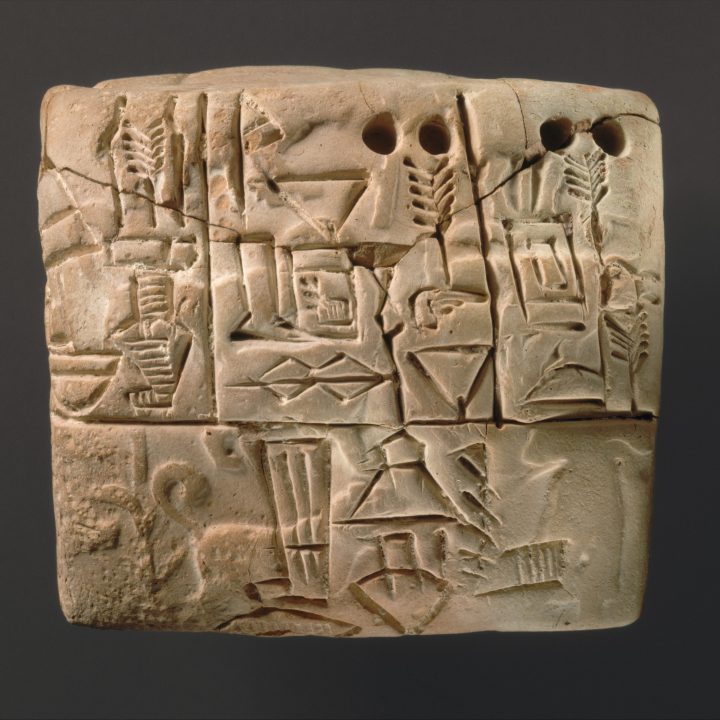
- Sumerian cuneiform was initially born as a picture script. In other words, a picture was made of what was intended to be told. Cuneiform is a writing system written from left to right.
- The oldest clay tablets contain houses, huts, containers, animals such as goats, sheep, fish, birds, and human limbs such as heads, hands and feet. These show that the basis of cuneiform is based on picture script.
E-TABLETS
Electronic tablets are today’s equivalents of clay tablets. The first prototypes emerged in 1986 and have developed every year since then. The pen used to write by engraving on clay tablets, STYLUS-STILUS-STYLO, is now called e-tablets and the pens used to touch smartphones.